Most route prep starts with experience: the operator remembers which machines are busy, which products move fast, and which locations are unpredictable.
That experience matters. But as the route grows, memory gets stretched. Forecasting helps turn history into a cleaner plan.
Forecasting starts with demand patterns
Every product has a rhythm. Some sell steadily, some spike by location, and some move only when a specific customer group is present. Forecasting looks at recent sales behavior and turns that pattern into a practical estimate for the next service window.
The goal is not perfection. The goal is to reduce obvious misses: arriving without enough best sellers, overpacking slow items, or visiting machines that could have waited.
Better forecasts create better pick lists
A good pick list answers a simple question: what should I load before I leave the warehouse?
When that list is based on recent machine-level demand, operators can prepare faster and with more confidence. The route starts with fewer last-minute guesses and fewer “just in case” products taking up space.
Forecasts also protect labor time
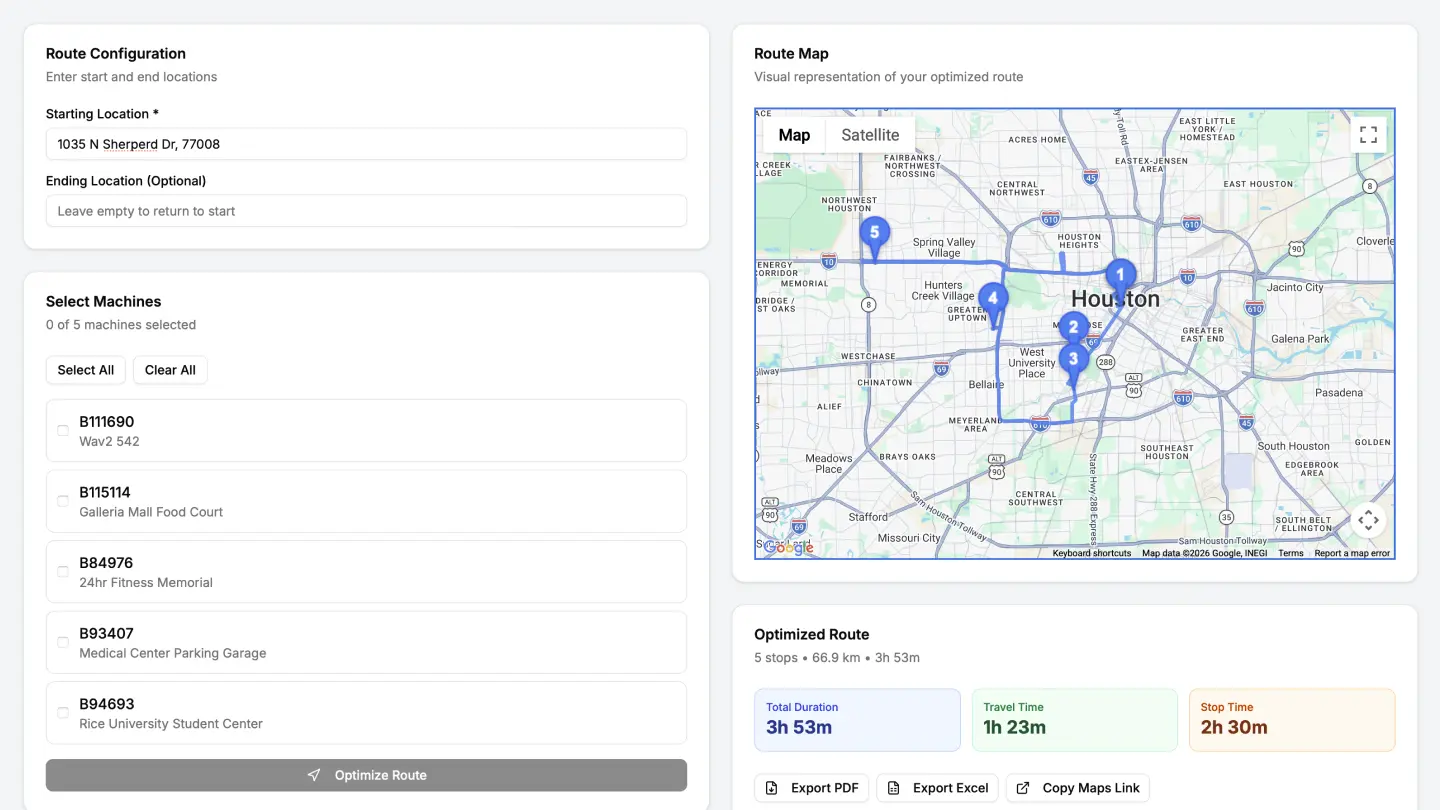
Route labor is expensive. Driving to a machine that does not need service wastes time, while missing a high-volume machine can cost sales. Forecasting helps prioritize the machines where the next visit matters most.
That makes the route feel less reactive and more intentional.
How uvend.ai helps
Build routes and picking lists from actual sales behavior.
uvend.ai helps operators turn sales history into forecasts, restocking templates, picking lists, and route insights.
Instead of guessing what each machine needs, teams can prepare around product demand, stockout risk, machine performance, and route priorities.